Digital communication has changed how people talk to each other. Instead of writing complete sentences, many people use short words, abbreviations, and internet slang to save time. One popular abbreviation you may see in everyday conversations is DW. It often appears in text messages, social media comments, and private chats.
If someone sends you DW, you might wonder what they are trying to say. Does it express concern, give advice, or mean something completely different? Understanding these short expressions can make online conversations easier.
In this guide, you will learn what DW means in text, how people use it, and why it has become common in digital communication. You will also discover practical examples, similar abbreviations, and helpful tips for using DW naturally in 2026.
What Does DW Mean In Text?
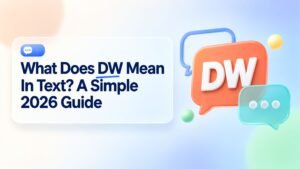
DW means “Don’t Worry” in text messages and online conversations. People use it to reassure someone, reduce stress, or let them know that a particular situation is not a problem.
For example, imagine that you accidentally send a message to your friend and immediately apologize. Your friend might reply, “DW, it’s okay.” This means they are not upset and want you to stop worrying about the mistake.
DW is a friendly and casual abbreviation. It is especially popular among people who regularly communicate through messaging apps and social media platforms.
Here are some common situations where DW appears:
- When someone apologizes for making a mistake.
- When a friend feels nervous about something.
- When someone thinks they have caused an inconvenience.
- When a person needs emotional reassurance.
- When someone wants to make a conversation more relaxed.
The exact meaning can depend on the conversation. However, “Don’t Worry” is the most widely recognized meaning of DW in everyday texting.
Simple Meaning (In Easy Words)
In simple words, DW means “Don’t Worry,” “It’s Okay,” or “Everything Is Fine.”
It is a quick way to tell someone that they do not need to feel stressed, embarrassed, or concerned about something.
Think of DW as a shorter version of a comforting sentence. Instead of typing a complete response, someone can use just two letters to communicate reassurance.
For example:
- Friend: “Sorry I forgot to call you.”
- You: “DW, it’s fine.”
Another example:
- Friend: “I hope I didn’t upset you.”
- You: “DW, we’re good.”
Both conversations show how DW makes communication easier.
The abbreviation can also communicate kindness. It tells the other person that you understand their situation and do not want them to feel uncomfortable.
However, remember that DW is informal. It works well in personal messages but may not be appropriate in professional emails, official documents, or serious business conversations.
Where Is DW Used?
DW appears across many digital communication platforms. Since it is short and easy to understand, people can use it in different types of conversations.
Here are some common places where you may encounter this abbreviation.
1. Text Messages (SMS)
DW is frequently used in regular text messages between friends, family members, and people who know each other. It helps make everyday conversations shorter.
Example:
“DW, I’ll reach there in 10 minutes.”
2. WhatsApp
People use DW in WhatsApp chats to reassure others or respond to apologies. It is common in private conversations and group messages.
Example:
“DW about the delay. Take your time.”
3. Instagram DMs
Instagram users often use DW when chatting with friends, followers, or people they know. It can make conversations sound more relaxed.
Example:
“DW, I didn’t take your comment personally.”
4. Snapchat
On Snapchat, DW may appear in quick replies and casual conversations. People often prefer short expressions because messages are usually informal.
Example:
“DW, your streak is safe!”
5. TikTok Comments
Some users write DW in TikTok comment sections when responding to questions, mistakes, or concerns.
Example:
“DW, everyone makes mistakes.”
6. Facebook Messenger
DW can also appear in Facebook Messenger conversations. Friends and family members use it to show understanding and offer reassurance.
7. Gaming Chats
Online gamers sometimes use DW when communicating with teammates. It can help keep the conversation positive after a mistake.
Example:
“DW, we can win the next round.”
Why Do People Use DW?
People use DW because it is short, convenient, and easy to understand. Modern digital communication often happens quickly. Typing a complete sentence is not always necessary when a simple abbreviation can express the same idea.
Here are the main reasons people use DW.
1. To Save Time
Typing two letters is faster than writing “Don’t worry.” This makes DW useful during quick conversations.
2. To Reassure Someone
People use DW to help friends feel comfortable. It communicates that a mistake or problem is not something they need to worry about.
3. To Sound Friendly
DW can make a conversation feel relaxed and welcoming. It is often used between people who already have a comfortable relationship.
4. To Avoid Unnecessary Apologies
Sometimes people apologize repeatedly for small mistakes. DW helps them understand that everything is fine.
5. To Keep Conversations Simple
Short abbreviations make online communication easier. DW delivers a clear message without requiring a long explanation.
6. To Show Understanding
Using DW can demonstrate patience and understanding. It tells the other person that you recognize their concern.
However, the way you use it matters. A friendly response should match the situation and the relationship you have with the person.
Real-Life Examples Of DW In Text
Understanding DW becomes easier when you see how people use it in everyday conversations. The following examples show different situations where this abbreviation sounds natural.
| Situation | Conversation | Meaning |
| Apology | “Sorry I’m late.” “DW!” | Don’t worry about it. |
| Friendship | “I forgot your birthday.” “DW, it’s okay.” | No problem. |
| School | “I couldn’t finish the homework.” “DW, we’ll discuss it.” | Don’t stress. |
| Work | “Sorry for the delay.” “DW, thanks for updating me.” | It’s fine. |
| Gaming | “I missed that shot.” “DW, next round!” | Don’t worry. |
| Planning | “I might arrive late.” “DW, take your time.” | No need to worry. |
| Family | “I accidentally broke the cup.” “DW, it happens.” | It’s not a big issue. |
Here are a few additional examples.
Example 1: Between Friends
Alex: “Sorry, I couldn’t reply yesterday.”
Sam: “DW, I know you were busy.”
In this conversation, Sam uses DW to show understanding and avoid making Alex feel guilty.
Example 2: On WhatsApp
Person A: “I think I sent the wrong picture.”
Person B: “DW, I haven’t shared it with anyone.”
Here, DW reassures the other person that the situation is under control.
Example 3: In a Relationship
Person A: “Are you angry because I forgot?”
Person B: “No, DW. Everything is okay.”
The abbreviation helps communicate comfort and reassurance.
Example 4: During Online Gaming
Player A: “Sorry, I lost the match.”
Player B: “DW, we can try again.”
This example shows how DW can encourage someone after a disappointing experience.
Example 5: In a Group Chat
Friend A: “Sorry everyone, I misunderstood the plan.”
Friend B: “DW, we’ll figure it out.”
DW keeps the group conversation positive and friendly.
DW vs Similar Terms
DW is not the only abbreviation people use to make online conversations easier. Several other expressions communicate reassurance, agreement, or understanding.
However, these abbreviations do not always have exactly the same meaning.
| Abbreviation | Full Form | Meaning |
| DW | Don’t Worry | Reassures someone |
| NP | No Problem | Shows something is not an issue |
| NBD | No Big Deal | Says something is not important |
| NVM | Never Mind | Tells someone to disregard something |
| IDC | I Don’t Care | Shows a lack of concern or interest |
| WYD | What You Doing? | Asks what someone is doing |
| TTYL | Talk To You Later | Ends a conversation temporarily |
| LOL | Laughing Out Loud | Expresses amusement |
| IMO | In My Opinion | Introduces a personal opinion |
| TY | Thank You | Expresses gratitude |
DW vs NP: DW means “Don’t Worry,” while NP means “No Problem.” Both can reassure someone, but DW focuses more directly on reducing concern.
DW vs NBD: NBD means “No Big Deal.” It suggests that something is not important enough to worry about. DW directly tells someone not to worry.
DW vs NVM: NVM means “Never Mind.” It is commonly used when someone wants another person to ignore a previous message or request.
DW vs IDC: IDC means “I Don’t Care.” Unlike DW, it can sound dismissive or uninterested, depending on the context.
Understanding these differences helps you choose the right abbreviation for each conversation.
When Should You Use DW?
DW is suitable for casual conversations where someone needs reassurance. It is especially useful when communicating with friends, relatives, classmates, or people you know well.
You can use DW in situations such as:
- When a friend apologizes for replying late.
- When someone makes a small mistake.
- When a person feels nervous about an upcoming event.
- When someone worries about inconveniencing you.
- When a teammate makes a mistake during a game.
- When you want to keep a conversation friendly.
- When someone repeatedly apologizes for something minor.
However, there are situations where writing the complete phrase is better.
For example, avoid using DW in formal business emails or important professional discussions. A complete sentence sounds more respectful and professional.
Instead of writing:
“DW, I’ll check the report.”
You could write:
“Please don’t worry. I’ll review the report and get back to you.”
The best approach is to consider your audience before using internet slang. A short abbreviation may work perfectly with friends but seem too casual in a professional setting.
Common Misunderstandings About DW
Although DW usually means “Don’t Worry,” people sometimes misunderstand it because abbreviations can have different meanings in different situations.
Here are some common misunderstandings to avoid.
1. Thinking DW Means Something Negative
DW is generally a positive or neutral expression. It is usually intended to reassure someone rather than criticize them.
2. Assuming It Always Shows Happiness
Someone using DW may not necessarily be happy. They might simply want to tell you that a situation is manageable.
3. Confusing DW With Other Abbreviations
DW and similar expressions may look alike in short conversations. Always consider the surrounding words before deciding what an abbreviation means.
4. Thinking DW Is Always Romantic
Some people use DW in relationships, but it is not specifically a romantic abbreviation. Friends, family members, and coworkers may also use it.
5. Misreading Its Tone
A short reply such as “DW” may sometimes appear cold or uninterested. However, the sender might simply prefer short messages.
6. Ignoring Context
Context is important when understanding internet slang. If someone uses DW in an unusual conversation, consider the complete message rather than assuming its meaning immediately.
Remember that digital messages do not always communicate emotions clearly. When something seems confusing, asking for clarification is better than making assumptions.
Pro Tips For Using DW Correctly
Using DW is simple, but a few practical tips can make your messages sound more natural.
- Understand the conversation: Use DW when someone needs reassurance or feels concerned.
- Know your audience: It is better suited to friends and casual conversations.
- Keep your tone friendly: A short abbreviation can sometimes sound cold. Add a few words when necessary.
- Avoid overusing it: Repeating DW in every conversation can make your replies feel less personal.
- Use complete sentences when needed: Serious situations deserve thoughtful and clear responses.
- Consider the platform: DW is suitable for messaging apps, social media, and gaming chats.
- Pay attention to emotions: If someone is genuinely upset, offer more support instead of replying with only two letters.
- Check the context: Make sure the abbreviation fits the conversation before sending it.
For example, if your friend says, “I’m really worried about my exam tomorrow,” replying only “DW” might feel too brief.
A more thoughtful response would be:
“DW, you’ve prepared well. Just stay confident and do your best!”
This response uses the abbreviation while providing additional encouragement.
The most important tip is to communicate naturally. Slang should make conversations easier, not create confusion.
Final Thoughts
DW means “Don’t Worry” in text messages, social media conversations, and everyday online communication. It is a simple abbreviation that helps people reassure others, respond to apologies, and make conversations feel more relaxed. Whether you see it on WhatsApp, Instagram, Snapchat, TikTok, or in a gaming chat, its common meaning is usually easy to understand from the context.
In 2026, short expressions like DW remain useful because people prefer quick and convenient communication. However, using the abbreviation correctly is important. Consider the situation, understand the other person’s feelings, and choose your words carefully. A simple DW can make someone feel better, but sometimes a complete and thoughtful sentence communicates much more.
FAQ Section
1. What does DW mean in text messages?
DW means “Don’t Worry.” People use it to reassure someone and communicate that a mistake or situation is not a problem.
2. What does DW mean on WhatsApp?
On WhatsApp, DW usually means “Don’t Worry.” It is commonly used between friends and family members to offer reassurance.
3. What does DW mean on Instagram?
On Instagram, DW generally means “Don’t Worry.” Users send it in direct messages and comments to make conversations more friendly.
4. Is DW a positive or negative abbreviation?
DW is generally positive or neutral. It usually expresses reassurance, kindness, and understanding, although the tone depends on the conversation.
5. What should I reply when someone says DW?
You can reply with “Thanks,” “I appreciate it,” “Okay, thank you,” or “That’s really kind of you.”
6. Does DW mean Don’t Worry in relationships?
Yes. People commonly use DW in romantic conversations to reassure their partners and show that everything is okay.
7. Is DW still popular in texting in 2026?
Yes. DW remains a recognizable texting abbreviation. People continue using it in casual messages, social media chats, and online conversations.